About me
Sailors’ family
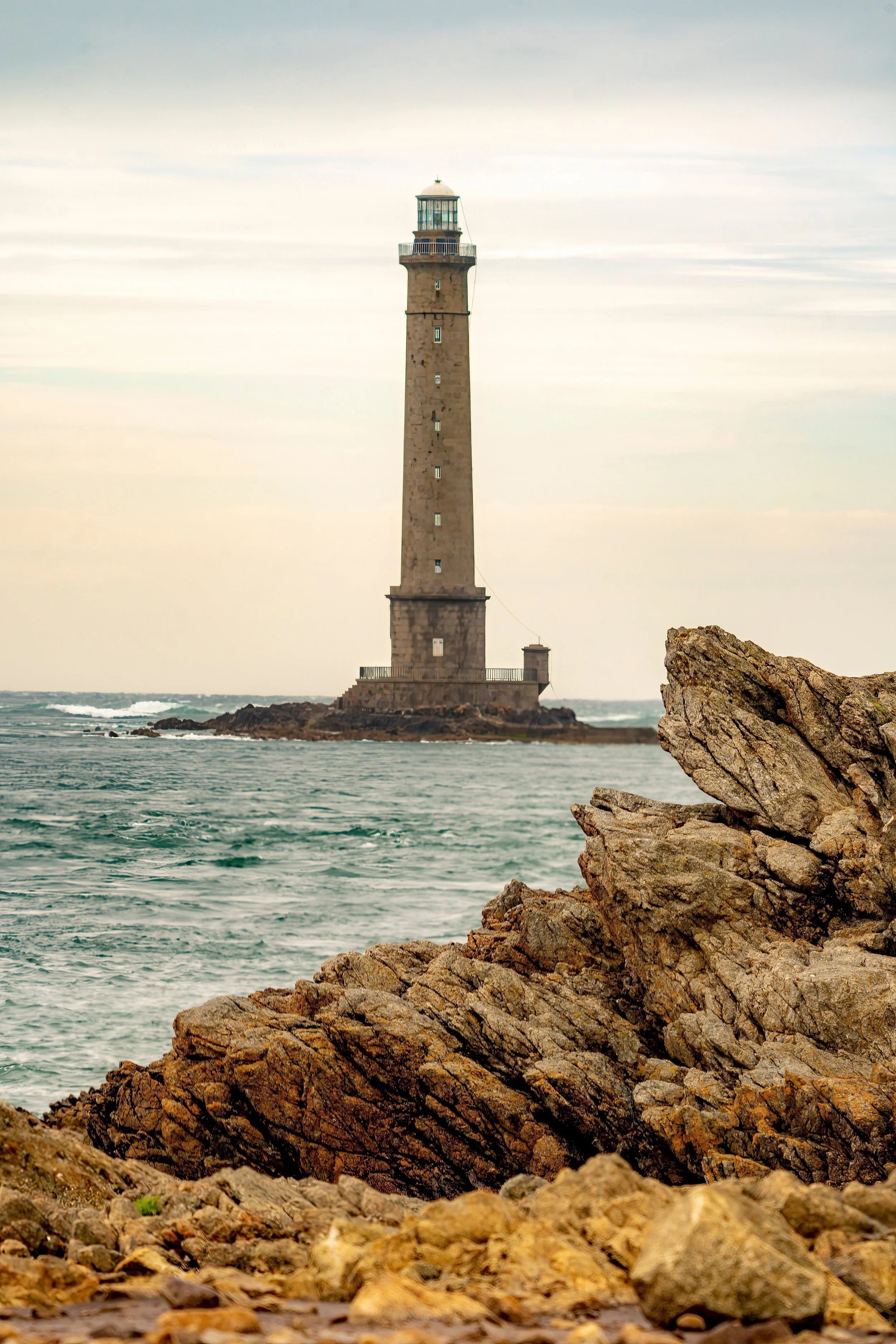
As a child, I dreamed of working at sea and travelling the world — something that seems to run in the family. We are a family of sailors: my great-great-grandfathers served in the fleet and took part in long expeditions. Today my relatives and I still work at sea, though now as scientists.
I am not the cliché of a child who always loved animals. My first biology classes were about plants and vertebrates; I didn’t dislike them, but they never sparked anything in me. Everything changed when I joined Misha Chertoprud’s hydrobiology club, where my fascination with invertebrates began and never faded. It was also there that I learned traditional fieldwork was not for me — hiking with a heavy backpack and camping in the cold and rain. Instead, I found my place in the lab, and at marine stations and research vessels, where large microscopes and controlled experiments let me study how animals actually function.
PhD
During my PhD in Vladimir Malakhov’s lab, I studied the anatomy of the giant hydrothermal-vent tubeworm Riftia pachyptila. I learned and performed every method myself and did the work entirely on my own — from sectioning, imaging, and 3D reconstruction to drawing and analysis. Working so independently was tremendous fun, and it was here that Malakhov taught me the principles of comparative anatomical analysis, which I still use today and now pass on to my own students.
Moscow State University
After defending my PhD, I joined the Department of Invertebrate Zoology at Moscow State University, where I continued to work independently and led my own projects — on neural architecture, the blood circulatory system, body formation, and the establishment of symbiosis. I extended my work to other annelids, but siboglinids — the mostly deep-sea, gutless tubeworms related to Riftia — remained my true passion, and I secured several prestigious grants to study them.
International collaborations with Andreas Wanninger (2013), Katrine Worsaae (2015, 2016, 2018), and Andreas Hejnol (2019) broadened my approaches in both research and teaching, as well as my professional network. Those experiences taught me how important it is for young scientists to gain skills directly from experts in the field, which is why I went on to organize several training courses, conferences, and workshops to broaden the education of students and early-career specialists.
University of Jena
In Jena I took my siboglinid research further, turning to the trophosome — the organ of symbiotrophic nutrition — and its bacteriocytes, the cells that house bacterial symbionts. I now study the host–symbiont relationship in detail using FISH, metagenomics, spatial transcriptomics, and gene expression.
Jena is also where my interest in ultrastructure grew into a specialty, making me the lab’s resident expert. I built the ultramicrotomy lab and established collaborations with other TEM microscopists in the city. I have since expanded from two-dimensional electron microscopy to volume EM (vEM), through the ZooCell network and a pioneering EMBO course on the subject.
Beyond the tubeworms
As a professional zoologist and EM microscopist, I enjoy working with many other invertebrates — ctenophores, xenacoelomorphs, nematomorphs, chemosynthetic mussels, and copepods. Among them, the parasitic larvae of nematomorphs, which I study in Andreas Hejnol’s lab in Jena, have become something of an obsession. They are remarkably tough: their hard cuticle and microscopic size make them very difficult to work with, yet all the more fascinating, opening a window onto host–parasite relationships and how a parasite can control the behaviour of its host.
Expeditions
Cruises and work at marine stations have taken me across many seas. I have led and joined expeditions to the Russian Arctic, the North Atlantic, and the Fram Strait, where our team documented siboglinid tubeworms for the first time — often in areas of methane seepage and gas hydrates. This fieldwork led to the description of a new genus and species, and to our first success in keeping Arctic tubeworms alive in the laboratory, a step toward studying these elusive animals under controlled conditions.